
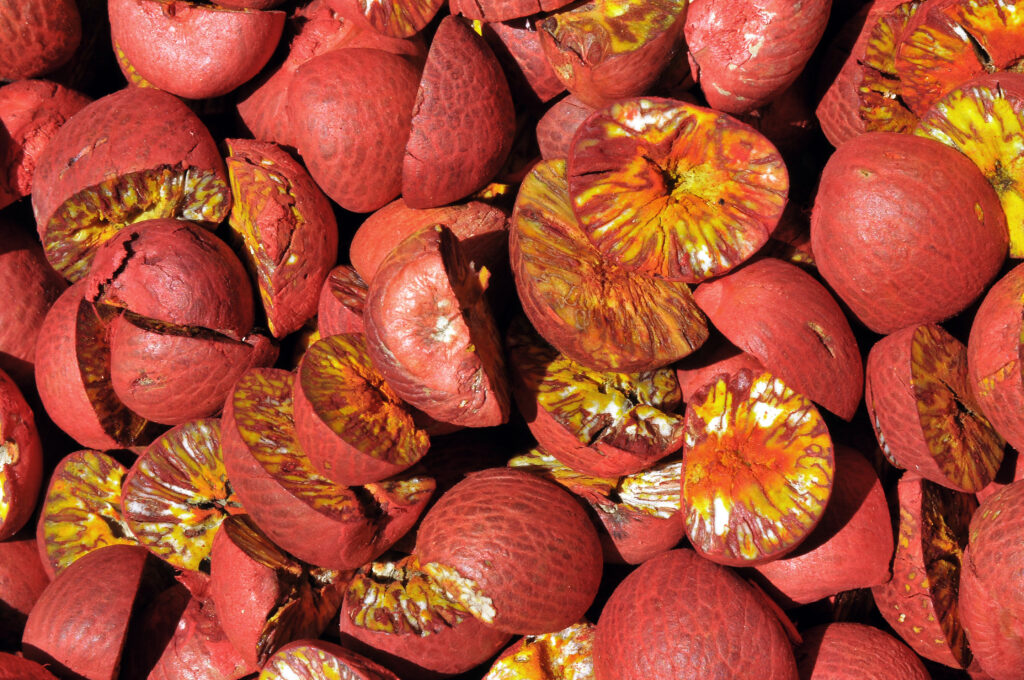
In the markets of Langkawi and across Southeast Asia, you will often see small bundles of heart-shaped leaves displayed alongside reddish-brown seeds. To the uninitiated, they might seem unremarkable. Yet these two humble plants — betel leaf and areca nut — carry within them thousands of years of hospitality, ceremony, and cultural memory.
At Langkawi Cooking School, both plants grow on our farm. The betel leaf vines climb gracefully, while the areca palm stands tall, quietly connecting our guests to a practice that shaped countless generations. During our sessions, we walk visitors through the traditional preparation — slicing the areca nut, adding slaked lime, wrapping it carefully in a betel leaf — and share stories of how the older generation would gather socially to chew and converse. For the adventurous, there is even the opportunity to experience it firsthand, though few take us up on the offer once they understand the intoxicating effects.
Together, they form what is known as sirih pinang in Malay, or paan across much of South Asia. For millennia, offering this combination to a guest has been a gesture of respect and welcome. At weddings, religious ceremonies, and social gatherings, the act of sharing betel leaf and areca nut remains symbolic — a living bridge between past and present.
The Betel Leaf Offers Fragrance and Folk Remedy
The betel leaf, botanically known as Piper betle, is a creeping vine with glossy, aromatic leaves. It thrives in the tropical heat, and its essential oils have long been valued in traditional medicine. In many households, betel leaves are believed to act as a natural antiseptic, helping to cleanse the mouth and freshen breath. Folk remedies have also used the leaves topically for minor wounds, relying on their antibacterial properties to aid healing.
In the kitchen, betel leaves occasionally appear as wrappers for small parcels of spiced ingredients — fragrant, edible vessels that add a peppery, slightly astringent note to the filling inside. Yet their primary role has always been ceremonial rather than culinary.
The Areca Nut Provides Stimulation and Symbolism
The areca nut, often mistakenly called betel nut, comes from the Areca catechu palm. Though commonly referred to as a nut, it is botanically a seed. When sliced and combined with slaked lime, then wrapped in a betel leaf, it creates a quid that is chewed slowly, releasing a mild stimulant effect.
The key compound, arecoline, acts on the body much like a gentle wake-up call — producing warmth, alertness, and increased salivation. Traditionally, areca nut was also used as a digestive aid and, in folk medicine, even as a remedy for intestinal parasites. In some cultures, the pairing of betel leaf and areca nut carries symbolic weight: the leaf is considered feminine, the nut masculine, and together they represent balance and union.
A Practice Woven Into Daily Life and Ceremony
Across South and Southeast Asia, the ritual of offering sirih pinang is deeply embedded in social customs. Elaborate containers — beautifully crafted trays and boxes — hold the ingredients, transforming a simple offering into an art form. In Hindu ceremonies, betel leaves are included among offerings during prayers. At Malay and Burmese weddings, the exchange of betel leaf and areca nut is part of the marriage rite itself.
Even in everyday settings, sharing a betel quid has long been a way to pause, connect, and converse. Archaeological evidence from the Philippines suggests that this practice dates back nearly five thousand years, making it one of humanity’s oldest customs.
The Shadow Side: Serious Health Risks
Yet beneath the cultural richness lies a growing body of scientific concern. The World Health Organization classifies betel quid chewing — with or without tobacco — as carcinogenic. Chronic use has been strongly linked to oral cancers, esophageal disease, and a precancerous condition called oral submucous fibrosis. For pregnant women, the risks are even graver, including low birth weight and preterm birth.
While traditional medicine has long attributed various health benefits to both betel leaf and areca nut, modern clinical evidence offers little support for most of these claims. What remains clear is that habitual chewing carries significant dangers, far outweighing any perceived medicinal value.
Tradition Meets Modernity
Today, the practice is changing. In many urban areas, public spitting of the distinctive red betel juice is discouraged or banned due to hygiene concerns. Younger generations are less likely to chew habitually, turning instead to flavoured alternatives or abandoning the practice altogether. Some religious sites, including major pagodas in Myanmar, now prohibit betel chewing within their grounds.
Yet the symbolic role endures. At weddings and festivals, sirih pinang continues to appear — not as a daily habit, but as a gesture of cultural continuity. It is a reminder that traditions can evolve, that we can honour heritage while acknowledging what science teaches us about harm.
A Legacy That Demands Balance
Betel leaf and areca nut occupy a complex place in Asian life. They are tokens of respect, symbols of union, and relics of ancient practice. They also carry real risks that cannot be ignored. The path forward lies not in erasing tradition, but in understanding it fully — preserving the memory and meaning while steering away from the harm. In this balance, we find a way to honour the past without sacrificing the future.

Langkawi Cooking School awaits you with an expansive farm tour, and Malaysian farm-to-table cooking experience.
Book Your Visit