
One of the things that sets Langkawi Cooking School apart from a standard cooking class is the flexibility built into the experience. Rather than working through a fixed menu that may or may not reflect what you actually want to cook, the school lets you choose your own dishes from a selection of traditional Malaysian recipes. You come in knowing what you’ll be making, and you leave with the skills to make it again at home.
Here is what’s on the menu.
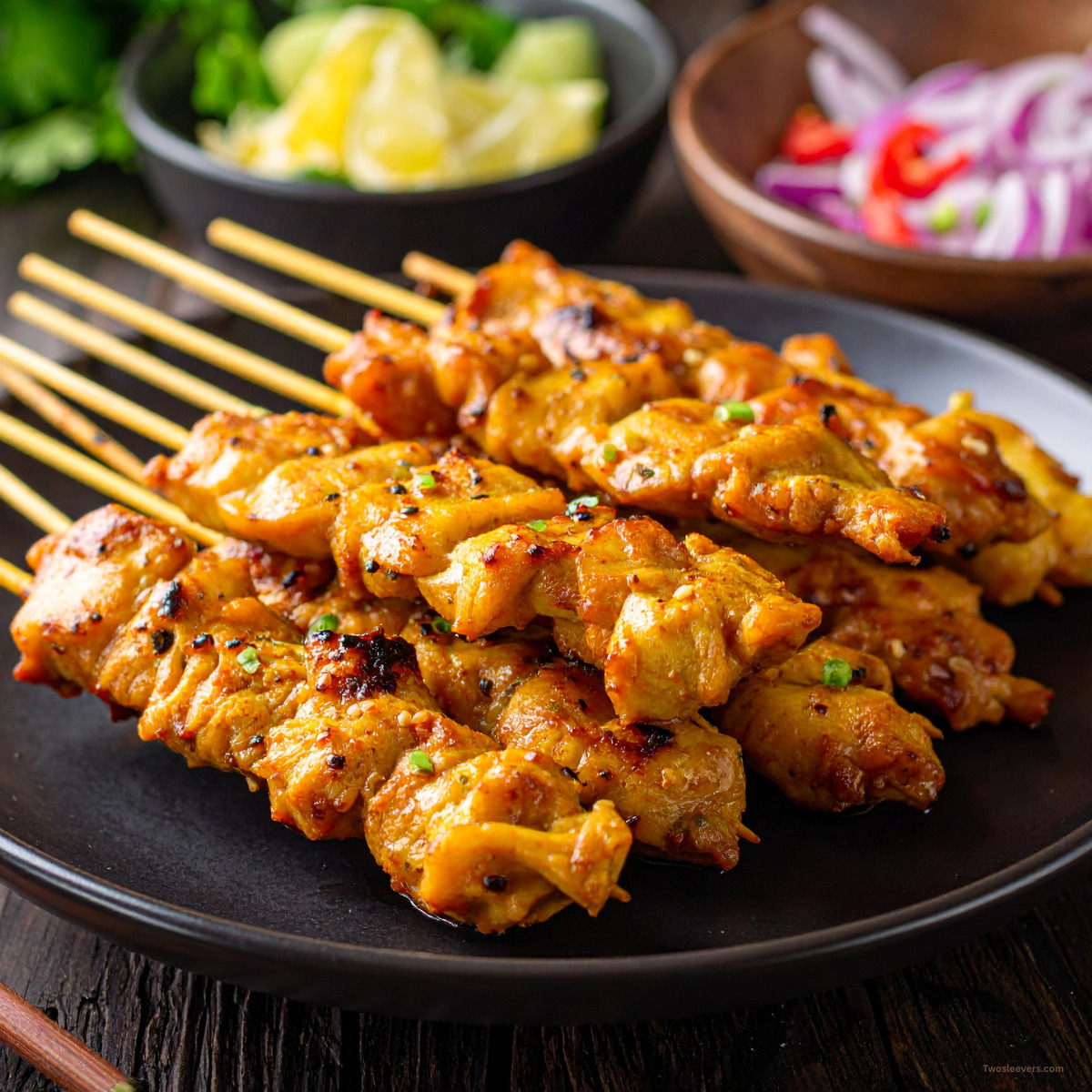
Chicken Satay Probably the most universally loved dish in the Malaysian repertoire. Strips of chicken marinated in a spice paste of lemongrass, turmeric, and galangal, threaded onto skewers and grilled over charcoal, served with peanut sauce and pressed rice. Making it yourself reveals why the restaurant version so rarely matches the street stall original — the paste, the marinating time, and the heat of the grill all matter in ways no shortcut can replicate.
Mee Goreng A wok-fried noodle dish that sits at the intersection of Malay and Indian-Muslim culinary traditions, built on a deeply savoury base of tomato, chili, and fermented shrimp. Fast to cook once the preparation is done, and a good lesson in the wok technique that gives Southeast Asian noodle dishes their characteristic texture and smokiness.
Pumpkin in Coconut Milk A gentler, sweeter dish that showcases how coconut milk functions in Malaysian vegetable cooking — not as a rich, heavy sauce but as a light, aromatic carrier that lifts the natural sweetness of the pumpkin without overwhelming it. An accessible entry point into the logic of Malay vegetable cookery.
Chicken in Clear Soup A clean, herbal broth built around lemongrass, galangal, and kaffir lime leaf — the kind of soup that appears deceptively simple but depends entirely on the quality and balance of its aromatics. This dish is a good illustration of how northern Malaysian cooking often favours freshness and lightness over complexity and depth.
Beef Rendang (served with rice) The most technically instructive dish on the menu. A slow-cooked dry curry of Minangkabau origin, built from a freshly ground spice paste reduced with coconut milk until the meat absorbs the spice and the oil separates to fry the exterior to a caramelised crust. It is the dish most guests are most curious about — and most surprised by when they understand how it’s actually made.
Turmeric Chicken (served with rice) Ayam goreng kunyit — chicken pieces fried in a paste of fresh turmeric, garlic, and ginger until deeply golden and aromatic. One of the most frequently cooked everyday dishes in a Malay household, and one that travels home particularly well: the technique is straightforward, the ingredients are accessible, and the result consistently impresses.
Mixed Vegetables in Coconut Milk A companion to the pumpkin dish and a broader study of the same technique applied to a variety of vegetables — long beans, eggplant, and leafy greens cooked with fresh chili and coconut milk into something that is simultaneously simple and deeply satisfying. Demonstrates the everyday cooking logic of the Malay kitchen rather than its celebratory dishes.
Ondeh-Ondeh The dessert of the menu and one of the most technically enjoyable things to make. Small glutinous rice balls filled with palm sugar and rolled in fresh grated coconut — when you bite into them, the palm sugar melts and releases in a single warm rush. The filling, the texture of the dough, and the balance with the coconut all require attention to get right, which makes the result all the more satisfying when it works.
How to book Each session accommodates a minimum of two participants. Morning and evening programs are both available, with complimentary transfers provided from the Pantai Cenang and Pantai Tengah areas. Select your dishes when you book, and the school will source everything fresh for your session.