
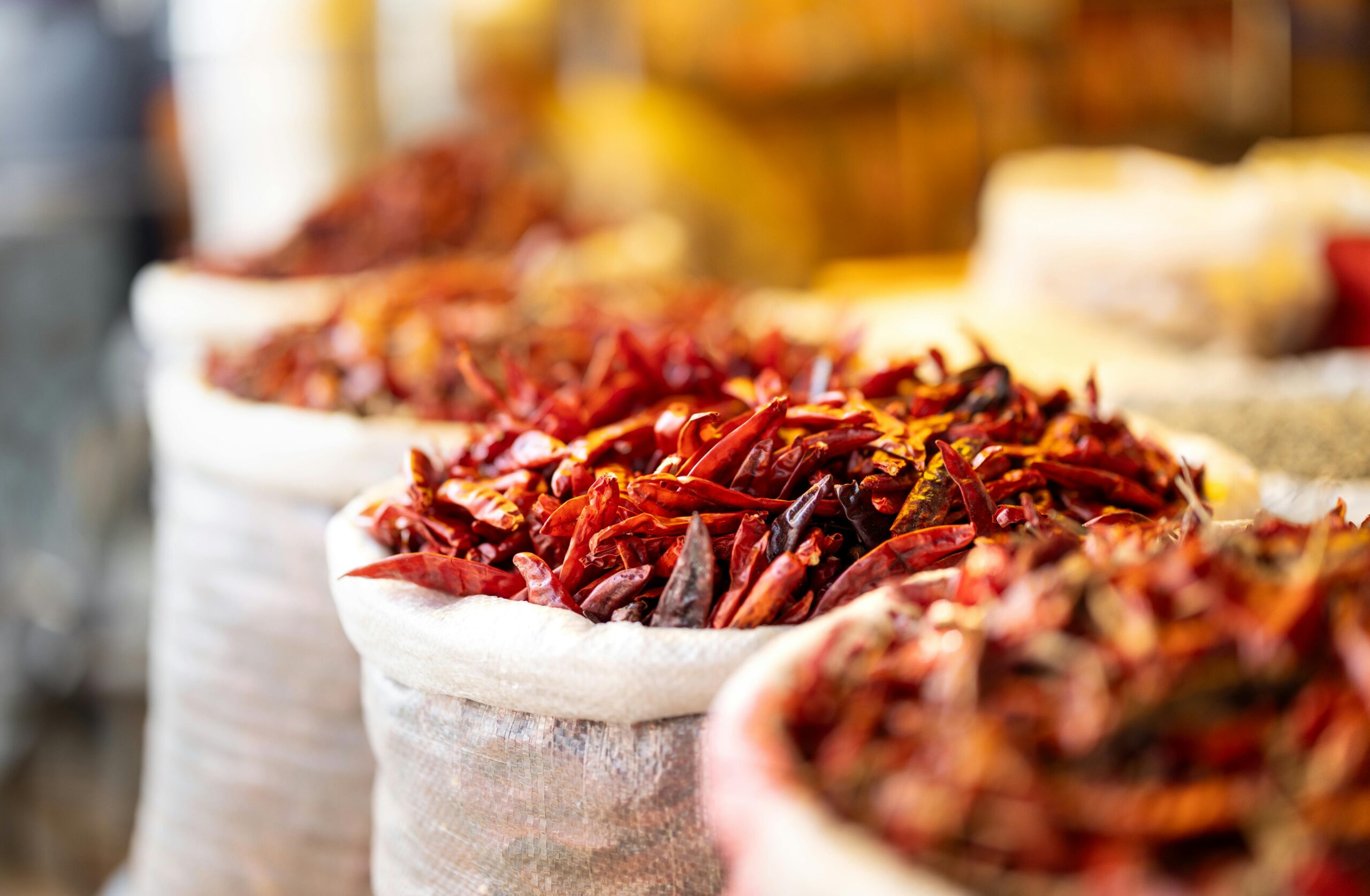
Take a stroll through any bustling food market in Langkawi and you’ll find them everywhere – small, vibrant, and not to be underestimated. Chillies. These fiery little fruits are more than just an ingredient; they are the driving force behind much of Southeast Asia’s most memorable cuisine. From small street food stalls to refined restaurants, chillies are a cornerstone of Langkawi cooking, and the Malaysian food culture.
If you have ever attended a cooking class, it quickly becomes clear that mastering the use of chillies is essential for recreating authentic spicy Asian, including Malaysian dishes. These aren’t just add-ons, but the heart and soul of the plate.
From South America to Southeast Asia
Chillies originated in South America and arrived in Asia in the 16th century via Portuguese traders. Since then, they’ve rooted themselves deeply into the culinary culture of the region. Today, it’s difficult to imagine Malaysian, Thai, or Indonesian cooking without their unmistakable heat and depth of flavour.
Despite their foreign origin, chillies have become an integral part of Malaysian cuisine. Without them, many of the spicy dishes we know and love would lose their edge – and their character.
The True Role of Chillies, Beyond the Heat
What makes chillies remarkable isn’t just their fire. It’s the complexity they bring to a dish – a mix of warmth, aroma, and vibrancy that elevates ingredients and creates harmony with other flavours. In Malaysian cooking, this balance is everything.
Classic spicy Malaysian food such as sambal belacan, ayam masak merah, and curry laksa all showcase the chilli’s ability to blend with ingredients like garlic, shallots, shrimp paste, and lemongrass. The result is not just heat, but richness, depth, and unmistakable local flair.
Learning with Fire at a Langkawi Cooking Class
At our cooking school in Langkawi, chillies are grown on-site and featured prominently in our lessons. At our Langkawi Cooking Class, Guests learn not only how to handle them safely but how to extract their best qualities. One of the most powerful ingredients we use is the tiny chilli padi – also known as bird’s eye chilli – which punches well above its weight.
Even just a sliver of chilli padi can brighten up a dipping sauce, enhance a stir-fry, or add the perfect finish to a spicy salad. In our Langkawi cooking class, students discover how to manage this intensity and use chillies to support, rather than dominate, a dish.
The Science Behind the Spice
The heat of chillies is measured using the Scoville scale, named after American chemist Wilbur Scoville. The scale estimates how much sugar water is needed to neutralise a chilli’s heat. For example, the chilli padi typically scores between 50,000 and 100,000 Scoville Heat Units (SHU). That’s serious fire – and it’s why our instructors emphasise caution and precision when using it.
To compare, cayenne pepper – often used in global cuisine and even in self-defence sprays – comes in at around 20,000 SHU. Meanwhile, the world’s hottest chilli, Pepper X, tops the scale at over 3 million SHU – though fortunately, you won’t find that one in our garden.
Growing Chillies at the Cooking School
We grow several varieties of chilli directly at our Langkawi cooking school, ensuring freshness and a direct connection to the local food culture. This also allows guests to see the full journey from garden to plate – and to better understand the importance of using ingredients in season and at their peak.
By using homegrown chillies, we also control their ripeness and strength, which helps beginners ease into the world of Malaysian spice without becoming overwhelmed.
A Cultural Staple with Medicinal Roots
Beyond cooking, chillies have long been used in traditional medicine across Asia, often for their supposed benefits to digestion and circulation. Whether or not you believe in their healing properties, their cultural significance is hard to ignore. In many households, a meal without chillies simply isn’t complete.
For travellers interested in connecting with local flavours and traditions, a Langkawi cooking class offers more than just recipes – it’s an experience of culture through spice.
More Than Just an Ingredient
Chillies may be small, but their influence on Southeast Asian cuisine is massive. They have reshaped dishes, challenged taste buds, and united cultures across borders. And in Malaysia, they’ve become a symbol of the country’s bold, vibrant food identity.
So if you find yourself in Langkawi and curious about what makes spicy Malaysian food so unforgettable, join us at the cooking school. You’ll discover not just how to cook with chillies, but how to appreciate the complexity and balance they bring. It’s not just about the heat – it’s about flavour, finesse, and understanding a region through its most fiery ingredient.