
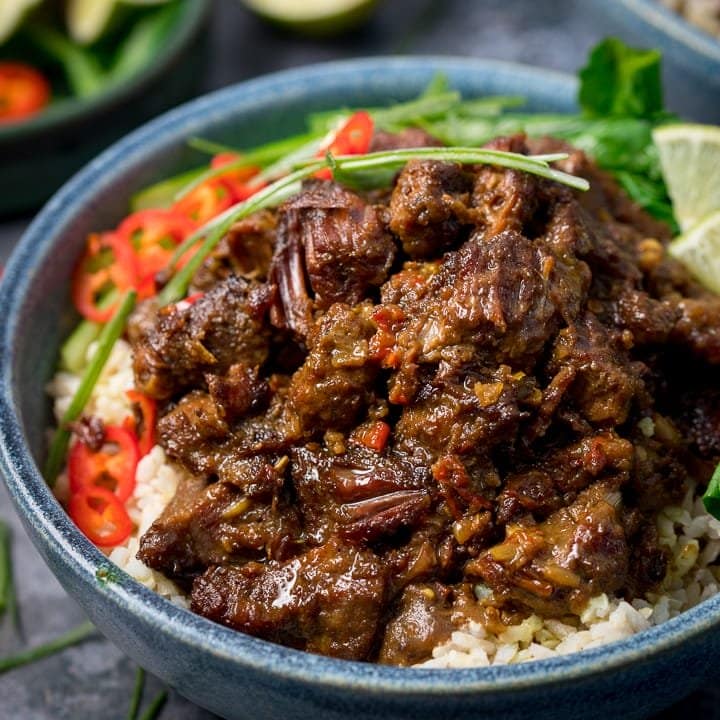
Order rendang in Langkawi and you’ll receive something rich, aromatic, and deeply satisfying. What you won’t receive — at least not from a restaurant plate — is any sense of what the dish actually is, where it came from, or why it takes the better part of a day to make properly. That story is worth knowing, because it changes how the food tastes.
Rendang began, as far as historians can trace, with Indian spice traders arriving in West Sumatra centuries ago. The Minangkabau people of the Sumatran highlands absorbed those culinary influences and transformed them into something distinctly their own: slow-cooked meat in coconut milk with a layered spice paste, reduced over hours until the liquid was nearly gone and the meat had absorbed everything around it. The technique was practical as much as it was delicious — rendang preserved well in the heat, making it ideal for traders and travellers moving across the Malay Archipelago. It spread through migration, carried by Minangkabau communities who settled across the region, reaching the Malay Peninsula and eventually embedding itself into the food culture of what is now Malaysia.
The dish that arrived in Malaysia evolved. Malaysian rendang tends to be saucier than its Sumatran ancestor, often using toasted grated coconut — kerisik — to thicken and add a nutty depth, with spice profiles that incorporated cloves, cinnamon, and star anise from the Indian-Malay trading tradition. Different states developed their own versions: Rendang Tok from Perak is famously dry and heavily spiced; Negeri Sembilan’s version carries the heat and creaminess of its Minangkabau heritage. What they share is the philosophy of the cooking process itself — patience, attention, and time.
That philosophy is part of what makes rendang so poorly served by the restaurant context. A good rendang takes hours. The coconut milk must pass through what cooks call kalio — a thick, stew-like intermediate state — before continuing to reduce until the separated oil fries the meat directly, coating it in a caramelised crust of spice. Shortcut versions exist everywhere. The real thing requires a decision to not rush it.
This is precisely what makes Langkawi Cooking School a different kind of experience. Cooking rendang here — from a spice paste ground fresh from ingredients you’ve just selected at the morning market — is not a performance of Malaysian food culture for visitors. It is, as closely as a single morning can deliver it, the actual thing. You grind the galangal, the lemongrass, the dried chili. You understand, hands-on, why the paste smells the way it does and how it changes when it hits hot oil. You learn why the dish demands a low flame and why stirring matters. By the time you eat, you’ve spent a morning inside the logic of the food rather than simply at the receiving end of it.
Rendang was voted the world’s most delicious dish in a CNN Travel poll. That recognition is deserved. But it doesn’t capture what makes the dish remarkable — which is not just the flavour, but the history, the patience, and the culture of movement and adaptation baked into every bite. A cooking class won’t give you all of that. But it will give you more of it than anything else on the island.